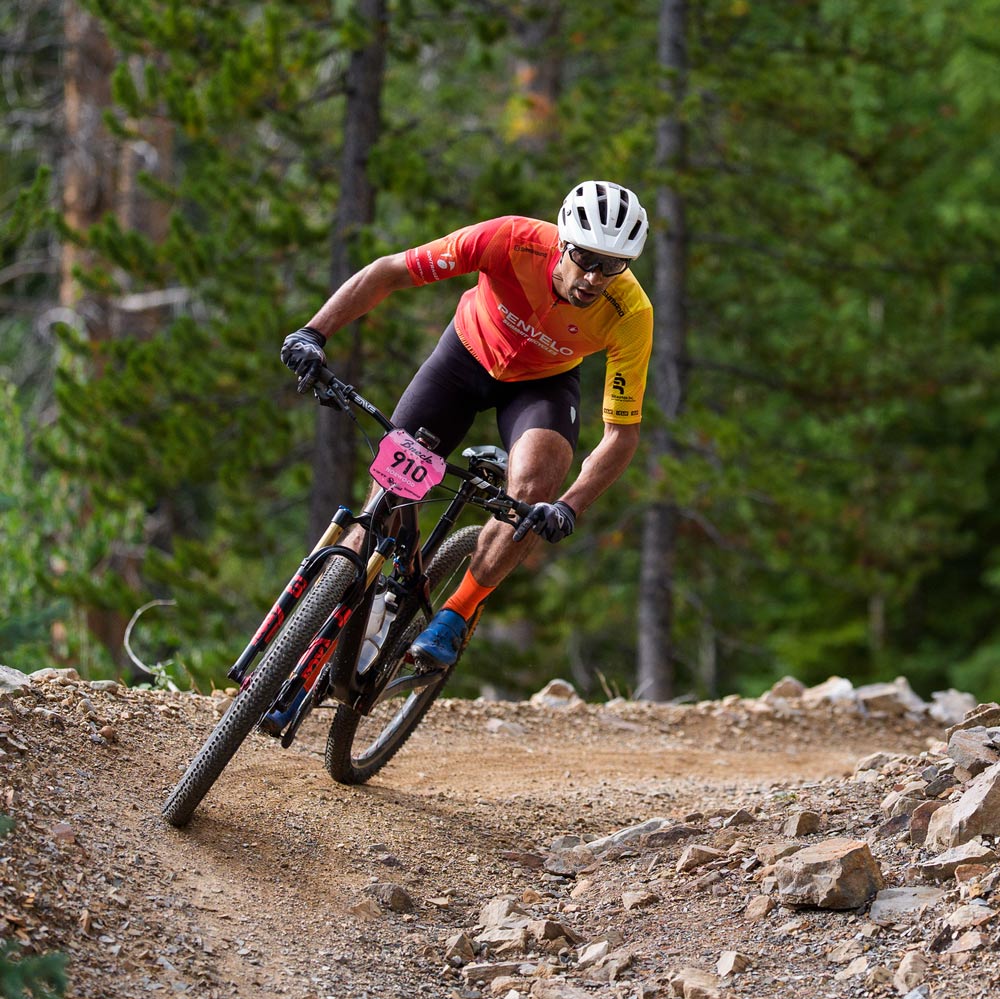
What if one of the most important things you could do during menopause was simply to get stronger?
Through perimenopause, menopause and the years that follow, hormonal changes can affect body composition, including lean mass. At the same time, maintaining muscle becomes increasingly important for how we want to live, whether that's running, cycling, playing pickleball, travelling or lifting a suitcase or simply feeling strong and capable in everyday life.
The good news? There is plenty we can do.
Strength training, good nutrition, proper recovery and staying active can all help us stay strong for the long term.
And none of them require you to completely change your life.
8 ways to stay strong through menopause
1. Pick up some weights
Strength training is one of the most useful things you can do for your muscles as you get older. And you don't need to spend hours in a gym.
Current physical activity guidelines recommend strengthening the major muscle groups at least twice a week. If you're starting from scratch, begin with two sessions and build from there.
Try this at home: 30 minutes for strength
All you need is your own body weight, a resistance band or a pair of dumbbells.
5 minutes: Warm up
Walk briskly or march on the spot and get your shoulders, hips and knees moving.
20 minutes: Get strong
Choose 5–6 exercises:
- Squats or sit-to-stands
- Reverse lunges or supported split squats
- Glute bridges
- Wall, counter or floor push-ups
- Bent-over rows with dumbbells or a resistance band
- Shoulder presses
- Plank or dead bug
Start with 2 sets of 8–12 controlled repetitions. The final few repetitions should feel challenging without compromising your technique.
5 minutes: Cool down
Walk, breathe and finish with some gentle mobility.
When the exercises start to feel easy, progress. Add some weight, another repetition or a more challenging variation.
You don't need hours. You need consistency.
2. Put protein on the plate
Exercise gives your muscles a reason to adapt. Nutrition gives them the building blocks.
Protein is broken down into amino acids, which the body uses for many functions, including building and repairing muscle. Nine of these are essential amino acids because our bodies cannot produce them in sufficient quantities, so we need to obtain them through our diet.
For active women, getting enough high-quality protein throughout the day is the foundation. Rather than leaving most of your protein until dinner, include a quality protein source at breakfast, lunch and dinner.
3. Hydration and Unbroken
Keep water within reach and drink regularly throughout the day, especially around exercise. And then there are the hot flushes.
When the heat suddenly hits, something ice cold can simply feel good. Keeping an insulated tumbler filled with ice-cold water beside you is an easy habit.
Fill your bottle with plenty of ice, cold water and Unbroken. Keep it beside you at your desk, take it to your workout or have it beside your bed, ready whenever you want something cold and refreshing while supporting your recovery routine.
4. Treat recovery as part of your training
Recovery isn't just for professional athletes, and it doesn't have to start when your workout ends.
Training challenges the body. Good nutrition, hydration, sleep and appropriate rest all support the recovery process.
A recovery day can still include walking and gentle mobility. The point isn't to stop moving. It's to give your body the opportunity to come back ready for more.
5. Think beyond the protein shake
Food comes first, and Unbroken isn't intended to replace your meals or daily protein intake. It offers something different.
Unbroken provides 122 marine peptides and 25 free-form amino acids, including all nine essential amino acids, in a light drink designed to be easy to use around activity.
Its amino acids and peptides have an ultra-low average molecular weight of 374 daltons, requiring minimal digestion before absorption.
The idea is simple: don't wait until you've finished to start thinking about recovery.
Start drinking before your strength session, tennis match, walk or bike ride. Sip it while you're active and finish it afterwards.
Before. During. After. Real Time Recovery.
Then get on with your day, and follow with your normal balanced meal.
6. Protect your sleep
Sleep can become more challenging during menopause, which makes good sleep habits worth paying attention to. Keep a regular routine where you can and give yourself time to wind down. If you've had a poor night, consider whether your body needs an easier training day rather than pushing through another hard session. Rest isn't lost training time. It's part of recovery.
7. Find your people
Sometimes the hardest part of staying active isn't knowing what to do. It's finding the motivation to keep doing it. That's where community can make an enormous difference.
We recently met the women of Woman Evolution in Spain, a fantastic community bringing women together through cycling, running and sport.

With members in age from 14 to 74, they're a wonderful example of what strong at every stage can mean.
Woman Evolution was created to encourage sport among women of all ages, while its cycling community focuses on building connections, sharing knowledge and experiences, and helping women develop through cycling.
Some are experienced athletes. Others are simply discovering the joy of being active. What matters is that they're doing it together. And sometimes that's exactly what keeps us going.
You don't need to be the fastest cyclist, run the furthest or lift the heaviest weights. Sometimes you simply need people who expect to see you on Saturday morning.
Find a cycling group. Walk with a friend. Join a tennis club, running group or strength class. Find people who make moving something you look forward to.
Woman Evolution puts it simply: working as a team makes the work easier, and it's never too late to learn.
Strong at every stage, and stronger together.
8. Don't chase perfection, just keep showing up
You don't need the perfect diet, the perfect workout plan or seven perfect nights of sleep. Start where you are.
Two strength sessions this week. More protein at breakfast. A walk at lunchtime. Your ice-cold Unbroken beside you. A little more attention to recovery.
And if showing up is easier when someone is waiting for you, find your people and do it together. Then do it again next week.
Small habits become powerful when you keep doing them.
Strong at every stage
Menopause doesn't have to be a signal to start doing less. It can be a reason to become more deliberate about the things that help us keep doing more.
Move. Get strong. Eat well. Hydrate. Recover. Find your people. Repeat.
Because recovery isn't only about being ready for tomorrow's workout.
It's about being ready for everything else you still want to do.
International Society of Sports Nutrition. Position Stand: Nutritional Concerns of the Female Athlete. Journal of the International Society of Sports Nutrition, 2023.
World Health Organization. WHO Guidelines on Physical Activity and Sedentary Behaviour.
Main image credit: Woman Evolution